
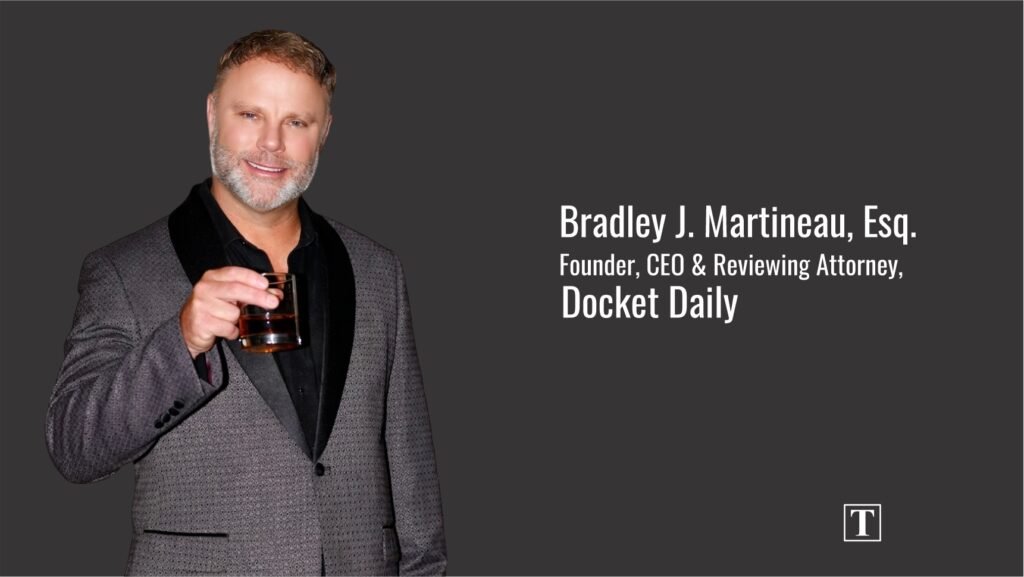
Bradley J. Martineau spent years practicing law in Pennsylvania and building an AI consulting practice before he built a company. What pushed him from advisor to founder was a question he could never fully answer for his clients or for himself: what actually changed today, across all fifty states and the federal government, in the four areas of law moving fastest, AI, data, privacy and cybersecurity? The tools available to him, research platforms, legislative trackers, newsletters, were each built to answer a narrower question than the one he needed answered every morning.
So, he built Docket Daily, a legal tech intelligence platform that tracks AI, data, privacy and cybersecurity law across all fifty states and the federal government, fifty-one jurisdictions in total, with every development reviewed by a licensed attorney before it reaches a subscriber. Bradley is also the author of four books, including Operational AI Governance and The Algorithmic State, and more than fifty published articles on AI and the law. For this cover story, he spoke about why he designed Docket Daily around human verification rather than full automation, what he believes the legal industry still gets wrong about innovation, and where he sees AI governance heading over the next five years.
1. Take us back to your years practicing law in Pennsylvania. Was there a specific moment or a specific matter where you realized the tool you needed to track AI, data, privacy, and cybersecurity developments simply didn’t exist and that you were going to have to build it yourself?
There wasn’t a single dramatic moment so much as a slow accumulation of the same frustration in my AI consulting practice, advising on how organizations adopt AI responsibly, writing about it, building frameworks for it. The job kept demanding an answer to a deceptively simple question: what changed today? Not what changed in one state, or in one federal agency, but across all fifty states and the federal government, across statutes, regulations, court decisions, executive orders, and enforcement actions in four fast-moving areas at once, AI, Data, Privacy, and Cybersecurity.
The tools I had were built for a different question. Research platforms are extraordinary at answering the question you bring to them, but they wait for you to ask. Legislative trackers cover bills but not the court decision that reinterprets the statute, or the attorney general enforcement action that tells you how a law is actually being applied. Newsletters are curated by someone else’s priorities and arrive days if not weeks late. What no tool did was the daily legwork: go find everything, across every jurisdiction, read it, decide whether it actually matters to these four major categories of tech law, and put a verified summary in front of me before I sat down in the morning with my coffee.
The moment it tipped from frustration to conviction was realizing I was spending the first hours of productive time each day doing manual surveillance work that a well-built system could do better, and that every technology attorney and in-house counsel I knew was independently doing the same thing, badly, or not doing it at all and hoping nothing important slipped past. In this field, what slips past you is the risk. State legislatures were passing AI and privacy laws at a pace no human reading schedule could match, and the gap between what the law required and what any practitioner could realistically track was widening every session.
So, I built it. First for myself, as a tech attorney who needed it, which I think is why it works. Docket Daily wasn’t designed in the abstract by a product team guessing what tech lawyers need. It was built by the person who actually needed the answer every morning, to the standard a tech attorney needs it: verified, cited, and complete.
2. For readers meeting Docket Daily for the first time, how would you describe what the platform does, who it serves, and what’s occupying most of your attention as CEO right now?
Docket Daily is a legal tech intelligence platform that tracks AI, Data, Privacy, and Cybersecurity law across all fifty states and the federal government, fifty-one jurisdictions in total. It monitors every instrument of legal change: proposed bills, enacted statutes, regulations, court decisions, executive orders, and attorney general enforcement actions. The system does the legwork continuously, and then, and this is the part I refuse to compromise on; every entry is reviewed by a licensed attorney before a subscriber ever sees it on the platform. Subscribers get a searchable daily digest and a live dashboard organized by jurisdiction and practice area, with plain-English and legal summaries for each development.
The distinction I draw for people is this: a research platform waits for your question. Docket Daily has already found the development, read it, summarized it, and verified it before you sit down with your coffee. We do the research legwork so attorneys can spend their time on judgment, advising clients, rather than surveillance.
It serves technology attorneys, in-house counsel, privacy and compliance teams, and increasingly anyone whose organization touches AI and needs to know what the law actually requires of them, which at this point is nearly every organization.
What occupies most of my attention right now is the trust infrastructure. In this business, coverage reliability is the entire product. A legal tech intelligence platform that misses one significant development has failed at the only thing that matters. A great deal of my energy goes into verification systems: coverage assurance that reconciles what we published against what actually issued, monitoring that catches a silent gap before a subscriber could, and acceptance testing that proves a fix is live in production rather than merely written. The second focus is distribution, making our verified corpus available not just through our own dashboard but as a grounding source for the enterprise AI systems attorneys are beginning to work inside, so that when an AI assistant answers a legal question, it can answer from attorney verified data instead of hallucinating.

3. You wear an unusual combination of hats at once, founder, CEO, the platform’s reviewing attorney, and the author of four books and more than fifty published articles on AI and the law. How do those roles feed each other, and does the writing shape the product, or is it the other way around?
They’re genuinely one job wearing four name tags, and each one keeps the others honest.
The writing and research came first, and it shaped the product’s DNA. When you write books like Operational AI Governance or The Algorithmic State, you’re forced to build complete mental models, because you can’t hand wave a governance framework across hundreds of pages the way you can in a conference talk. That discipline of completeness became Docket Daily’s core design principle: cover every jurisdiction, every instrument type, and every tech law pillar with no silent gaps. A framework with holes in it isn’t a framework, and a legal tech intelligence platform with holes in it isn’t intelligence.
But the influence now runs strongly in the other direction. Operating the platform gives me something most people writing about AI law don’t have: a daily, empirical view of the entire regulatory landscape moving in real time. I’m not theorizing about the pace of state AI legislation because I watch it come across the review queue every morning. That vantage point has changed what I write, and frankly made me more confident in it, because the claims are grounded in a comprehensive dataset rather than anecdote.
The reviewing attorney role is the keystone. Serving as the platform’s verification layer means I personally read what the system surfaces, every day. That does three things at once. First, it guarantees subscribers that a licensed attorney stands behind every published entry. Second, it gives me continuous, unfiltered quality feedback on the product, and I’m the most demanding user we have. Third, it keeps my legal judgment sharp on exactly the material the platform exists to cover. A CEO who only reads dashboards about the product would slowly lose touch with whether it’s actually good.
And the CEO role forces the other three to produce something real. Ideas from the AI books have to survive contact with paying customers, engineering constraints, and the unforgiving standard of daily reliability. That’s a healthy discipline for any author.
4. This edition profiles “Visionaries Powering Innovation in AI and IT.” Law is often held up as one of the slowest moving, most risk averse professions when it comes to adopting new technology. What does being a visionary innovator mean to you inside a field built on caution, and where do you think that kind of thinking is still missing across the legal industry?
I’d start by defending the caution. Legal conservatism isn’t a bug. It exists because the stakes are real. When a lawyer gets it wrong, someone can lose their liberty, their company, or their life’s work. For me, being an innovator in law doesn’t mean importing Silicon Valley’s “move fast and break things” into a profession where the things you break are people’s rights and organizations’ livelihoods. It means something more demanding: building technology that meets the profession’s highest standards rather than asking the profession to lower them.
That’s the design thesis behind Docket Daily. The innovative part isn’t that we use automation and AI. Almost everyone does now. It’s the architecture of verification wrapped around it: automated breadth and attorney reviewed depth. Machines do what machines do well, which is exhaustive, tireless surveillance across fifty-one jurisdictions. A licensed attorney does what the profession rightly demands a human do, which is stand behind the output. Innovation in law, done properly, is the art of pairing those two things without cheating on either.
Where is that thinking still missing? In my opinion, three places. First, in how firms frame the AI question. Most are still asking, “how do we avoid risk from this technology?” when the sharper question is “what becomes possible at a standard of quality we could never afford before?” Comprehensive fifty state regulatory monitoring used to be economically impossible for anyone but the largest organizations. Now it isn’t. The visionary move is noticing which impossibilities have quietly expired.
Second, in verification itself. The industry is racing to adopt generative tools while underinvesting in the boring machinery that makes them trustworthy, such as provenance, human review gates, and monitoring that proves the system is actually working today, not just that it worked when installed. The firms that treat continuous verification as the product, not as overhead, will own the next decade of legal tech.
Third, in accessibility. Legal tech intelligence has historically been priced and packaged for the AmLaw 100. But the solo practitioner advising a small business on an AI vendor contract faces the same fifty-one jurisdiction landscape as a Fortune 500 legal department. Building for that entire spectrum is a vision worth having.
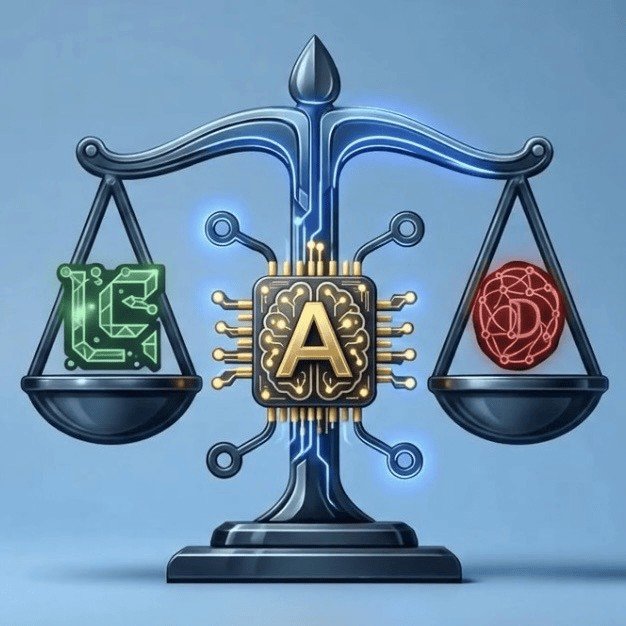
5. Docket Daily draws a sharp line between research tools like Westlaw or LexisNexis, AI assistants like Harvey or ChatGPT, and what your platform does. With research showing legal AI tools hallucinate citations in a meaningful share of queries, where do you see generative AI genuinely changing how attorneys track and act on legal change, and where do you think the market is still overestimating what an off-the-shelf AI tool can safely do inside a law practice?
The line I draw is about the direction of the workflow. Research platforms are reactive, magnificent archives that wait for an attorney’s question. AI assistants are conversational and respond to prompts. Docket Daily is proactive, it has already found, read, summarized, and attorney verified the development before an attorney knew to ask about it. You can’t prompt your way to awareness of a law you don’t know exists. That’s the categorical difference, and it’s why we’re complementary to those tools rather than competitive with them.
On where generative AI is genuinely transformative: language work under supervision. Summarizing a two-hundred-page bill into a faithful plain-English brief, triaging thousands of daily documents for topical relevance, translating legal change into what it means for a specific client’s compliance posture, these are real, today, and they’re the difference between comprehensive coverage being economically possible or not. We use AI for exactly this class of work inside Docket Daily, but always upstream of human attorney review. The model drafts but the attorney reviews, edits, and decides. Used that way, generative AI doesn’t lower the quality bar. It raises the coverage ceiling.
Where the market is currently overestimating unsupervised authority. The hallucination research doesn’t surprise anyone who understands the technology, these are probabilistic language systems, and a fabricated citation is not a malfunction, it’s the system doing what it does without a verification layer. The dangerous product pattern is the one that hands an attorney generated legal conclusions with confidence but no human accountability behind them. We’ve now watched a steady parade of sanctions decisions against lawyers, and pro se litigants, who filed AI fabricated citations, and we track those cases on the platform, which gives us an unusually clear view of how courts are responding. The pattern is always the same: the failure wasn’t using AI. It was skipping attorney verification.
My rule for the profession is simple: AI can do the legwork, but it cannot yet bear the responsibility. Every output that reaches a client, a court, or a compliance decision needs a human attorney standing behind it. Platforms should be architected so that standard is structural and built into the pipeline. That’s the sharp line, and I think the market ultimately converges on it, because the alternative keeps ending up in sanctions opinions.
6. You’ve built Docket Daily’s architecture, so client data never enters a model and PII is scrubbed before any AI call is made, aligned with rules like California SB 574 and ABA Formal Opinion 512. Attorney confidentiality obligations and the speed of AI adoption are often framed as being in tension. How do you think about that trade-off, and what would you say to other legal tech builders navigating the same obligations?
It’s not a trade-off for me, and I say that as someone who is also bound by the obligations personally. I’m not a vendor observing the rules of professional conduct from outside. I’m a licensed attorney subject to them. Confidentiality and AI adoption are only in tension if you treat privacy as a constraint to be minimized rather than a specification to incorporate into the structural design. If you start from the obligation and architect toward it, then the tension largely disappears.
Docket Daily’s structural advantage here is honest to admit: our product is built on public law, proposed bills, statutes, regulations, court decisions, and enforcement actions. But that didn’t make the discipline optional. It just made it a choice we could either take seriously or coast on. We took it seriously. Client and subscriber data never enters a model. Anything touching an AI call is scrubbed of personally identifiable information first. And we extended the same philosophy to the parts nobody was forcing us to fix, no client-side tracking pixels, no third-party analytics scripts, and no session replay anywhere on the platform. Measurement is server side so that opt outs are enforceable, and we honor Global Privacy Control signals automatically. I often put it this way: we track privacy law, and we run cleaner than most of the companies in our corpus. A platform serving privacy attorneys should be able to survive its own subscribers’ scrutiny.
Guidance like ABA Formal Opinion 512 confirmed what careful practitioners already understood, that competence now includes understanding the technology you use, and confidentiality doesn’t bend for convenience. The right response isn’t fear of the tools. It’s architectural literacy about them.
To other legal tech engineers, I would recommend three things. First, design from the obligation, not around it, because retrofitted privacy is always worse and usually dishonest. Second, make your data practices legible, because your buyers are lawyers who will read your architecture the way they read a contract, and vague answers about training data and retention are disqualifying. Third, treat the rules of professional conduct as your product spec, not your marketing department’s problem. The builders who internalize that the lawyer’s duty runs to the client, and build as if they shared that duty, are the ones the profession will still be using in ten years.
7. Walk us through one specific decision or moment building Docket Daily, good or hard, that still stands out to you, and what it taught you about running the company.
The decision that still shapes everything was choosing that no entry reaches a subscriber without a licensed attorney’s review, and then, harder, refusing to walk it back when it became expensive.
On a whiteboard, full automation is seductive. The system already found the development, classified it, and summarized it. Publishing automatically would be faster, infinitely scalable, and often indistinguishable from the human reviewed version, right up until the day it isn’t. I made human attorney review a structural invariant instead, the pipeline is architected so that publication without an approval stamp is not a policy we follow but a thing the system cannot do. That decision costs me personally every single day because I’m the reviewing attorney. It is the least scalable line item in the company. It is also the entire reason the product earns its trust.
The lesson that came with it was that the review gate only protects what actually reaches it. Early on, I learned the difference between believing a system works and proving it works. “The code is written,” “the fix is deployed,” and “the fix is actually running in production” are three different claims, and only the third one truly counts. There was a stretch where something I thought was handled turned out to be quietly incomplete, and the gap between reported status and verified reality was invisible until I went looking. Nothing catastrophic reached subscribers, the review layer did its job, but it changed how I run the company at a fundamental level.
Now, nothing is “done” at Docket Daily until it’s verified against the live system with evidence. Every fix ships with its own acceptance test. Coverage is reconciled daily against what jurisdictions actually issued, not against what our pipeline believes it examined. Monitoring has to prove a lane is alive, not merely fail to prove it’s dead, because silence and health are not the same thing.
What it taught me about running a company is that trust is an engineering discipline before it’s a brand value. Anyone can promise reliability. The companies that deserve it build machinery that would catch them breaking the promise. In legal tech intelligence, where the product is “you will not be blindsided,” that machinery is the company.
8. Where do you see AI governance and legal tech intersecting five years from now, and how is Docket Daily positioning itself to lead that shift rather than follow it?
Five years from now, I believe regulatory intelligence stops being something professionals read and becomes infrastructure that systems consume. That’s the intersection point.
Here’s my chain of reasoning. AI governance is moving from voluntary frameworks to binding law at extraordinary speed. We watch it happen daily across fifty-one jurisdictions. As those obligations harden, organizations can’t manage them with annual policy reviews, governance has to become operational and continuous, which is the thesis of my book Operational AI Governance: a living inventory of your AI systems, approval workflows, and continuous monitoring. But continuous governance has a dependency that almost nobody prices in, a continuously current, trustworthy picture of what the law requires. You cannot run automated compliance monitoring on top of a stale or hallucinated understanding of your legal obligations. Verified legal change becomes the ground truth layer the whole stack sits on.
At the same time, attorneys are moving their daily work inside AI assistants and enterprise copilots. Those systems are only as trustworthy as their grounding data, and the hallucination problem in legal AI is, at root, a grounding problem. The assistants don’t need to be replaced. They just need a reliable source of legal truth.
Docket Daily is positioning to be that layer. We’ve spent our existence building the asset this future requires: a comprehensive, structured, attorney verified corpus of AI, Data, Privacy, and Cybersecurity law across every U.S. jurisdiction, with the provenance and verification machinery to stand behind it. We’re building toward that corpus being consumable everywhere legal questions get asked.
Leading rather than following, to me, means having built the verification discipline before the market demands it. When enterprises start asking their AI vendors, “what is your legal grounding source and who stands behind it?”, and they will, we intend to be the answer that was ready years early. The five-year winners in legal tech won’t be the companies with the flashiest models. They’ll be the ones who own trustworthy data and can prove it.

9. Who are the business or legal leaders, past or present, inside or outside your industry, that you admire most, and what have you taken from watching how they lead?
From the law, Louis Brandeis. Before he was a Supreme Court Justice, he was a practicing lawyer who looked at emerging technology, the portable camera, in his era, and articulated the right to privacy before the law knew it needed one. He saw around a corner, and then did the unglamorous work of building the legal architecture for what he saw. That’s the template for everything I try to do, to anticipate where technology and law are about to collide, and then build the practical machinery, not just the argument. His famous line about sunlight being the best disinfectant is also, in a real sense, Docket Daily’s business model. The conviction that visibility itself is a public good.
From technology, I’ve drawn the most from the builders who treated trustworthiness as the product rather than a feature. I pay close attention to the leaders in AI who publish their safety thinking openly and impose constraints on themselves before regulators require it. Leadership by demonstrated standard rather than by announcement. Whatever you think of any individual company, that posture, “here is the bar we hold ourselves to, in writing, verifiable,” is the one I think the entire AI industry has to converge on, and it’s the posture I’ve tried to build into Docket Daily: human review as a structural guarantee, coverage reconciled daily, and claims backed by evidence.
And I’d be dishonest if I didn’t include the unfamous ones: the solo and small firm lawyers I practiced alongside in Pennsylvania. Watching attorneys carry total personal responsibility for their clients’ outcomes, with no committee to hide behind, just their name on every filing, shaped my standard for accountability more than any CEO biography. That’s the ethic I carried into Docket Daily. The common thread across all of them is the same: they closed the gap between what they claimed and what they could prove. That’s what I’ve taken. Say less, verify more, and let the standard you actually operate be the thing that speaks for itself.
“Do the legwork, verify everything, and put your name on it, because trust isn’t claimed, it’s engineered.”
Bradley J. Martineau
10. Your book Operational AI Governance lays out a sixteen-layer governance stack and three pillars, Model Inventory, Approval Workflow, and Continuous Monitoring, for scaling AI safely. For readers running AI initiatives outside of law, in IT, product, or operations, what’s the one governance mistake you see organizations make most often as they move from pilot to production?
Treating AI governance as an event instead of a process, approving the system once, at launch, and assuming the approval stays true.
It’s a natural mistake because it’s how organizations govern everything else. A policy gets reviewed, a vendor gets vetted, a project gets signed off, and then the organization moves on. But AI systems are not static artifacts, and neither is anything around them. The model gets updated by the vendor. The data drifts. Users find workflows nobody anticipated, the pilot that was approved for summarizing internal documents is quietly drafting customer communications six months later. And the legal landscape underneath the deployment moves constantly. An approval that was sound under last year’s regulatory picture may be noncompliant under this year’s, and I watch that picture change across fifty-one jurisdictions every morning. The system you approved is not the system you’re running within months, and sometimes weeks.
Continuous Monitoring is the pillar organizations tend to skip, and the one that matters most. Model Inventory and Approval Workflow feel like governance because they produce documents, meetings, and sign offs. Monitoring, however, is the unglamorous discipline of continuously proving the system still behaves inside its approved envelope. Specifically, that it is still used for its approved purpose, still performing within tolerances, and still lawful in every jurisdiction it touches. Without it, your AI governance program is just a photograph of a moving object.
And I’ll add the one critical lesson that running production systems taught me on top of writing the book: monitoring must prove health, not merely fail to report failure. Silence is not compliance. A control that hasn’t alarmed might be working, or it might be broken in a way that also broke the alarm. Well-designed governance affirmatively demonstrates, on a cadence, that each control is alive and each system is inside its approved envelope, and it treats “we haven’t heard anything” as a finding to investigate, not an assurance to relax on.
The advice for IT, product, and operations leaders is one sentence: budget as much for verifying your AI after launch as you spent on approving it before launch. Pilots earn approval once. Production earns it continuously, or not at all.

11. Is there anything else about your journey, Docket Daily, or your outlook that we haven’t asked about but that you’d like readers to know?
Two things. One about how Docket Daily was built, and one about why it matters beyond lawyers.
On the building: Docket Daily is proof of a thesis I’d been writing about before I lived it. AI has collapsed the distance between expertise and execution. A practicing attorney with deep domain knowledge and the discipline to work alongside AI tools can now build a production infrastructure that would have required a well-funded engineering organization a few years ago. I designed, built, and operate a platform monitoring fifty-one jurisdictions across the four areas of tech law, and I did it as the domain expert directing the machines rather than as a traditional software company. I mention this not as a boast but as a signal to every professional reading this from inside a specialized field. The tools have changed what one knowledgeable person can build. The scarce ingredient is no longer engineering headcount. It’s domain judgment and the willingness to hold the output to a professional standard. If you have those, the barrier you think exists probably doesn’t.
On why it matters: the pace of AI, data, privacy, and cybersecurity lawmaking is not a story about lawyers. It’s a story about everyone. Every company deploying an AI tool, every hospital handling patient data, every school district evaluating educational software is subject to a legal landscape that now changes materially every single week across dozens of jurisdictions at once. The gap between what the law requires and what organizations actually know is, in my view, one of the significant quiet risks in the economy right now. Closing that gap, making legal change visible, comprehensible, and verified, while fast enough to act on, is the mission. The dashboard and the daily digest are just the current form of it.
And the outlook: I’m genuinely optimistic. Not because the challenges of the AI era are small, but because I read the response to them every morning, where legislators, regulators, courts, and practitioners are working them out, in real time, figuring out how a society absorbs a transformative technology while keeping its values intact. It’s imperfect and it’s fast, but it’s happening. My job is to make sure nobody who needs to see it is flying blind.
Bradley J. Martineau, Esq.
Founder, CEO & Reviewing Attorney, Docket Daily
Docket Daily is a legal tech intelligence platform tracking AI, Data, Privacy, and Cybersecurity law across all fifty states and the federal government, every proposed bill, statute, regulation, court decision, executive order, and enforcement action, found, summarized, and verified by a licensed attorney before it reaches subscribers. Learn more at docketdaily.ai.